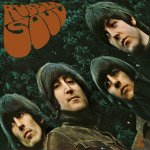
Rubber Soul Gets The Super Deluxe Treatment


by Bruce Spizer
Rubber Soul has always held a special place in the hearts of Beatles fans. For some, it is their favorite album. For others, it ranks somewhere in the top five. The sessions for the album produced 16 great songs, including a double A-side single, all the more impressive considering that the songs were written and recorded under great pressure. The Beatles had just returned from their 1965 North American Tour on September 2, knowing that EMI was expecting a 14-track LP and a single for the holiday season. Paul told The Beatles Book of their predicament: “We have nothing up our sleeves at the moment, the cupboard is definitely bare.” But somehow, they managed to release one of their best collections of songs and continue to innovate with new sounds.
Apple and Universal have prepared an impressive set of new releases for Rubber Soul, giving the album the deluxe treatment it so richly deserves. First and foremost, the sound is incredible throughout regardless of which edition(s) you buy. All provide a wonderful listening experience. For those that want to know and hear the full story, the Super Deluxe Edition, available in 4-CD and 5-LP vinyl formats, is the way to go. Each comes with an 88-page, 12 x 12 inch hardcover book with opening words by John Lennon (compiled from interviews) and Paul McCartney, informative text by Kevin Howlett, and several color and original black and white photographs of the band, session sheets, tape boxes, and hand-written lyrics. (The 2-CD, single CD, and Blu-ray editions come with booklets containing edited versions of the book.) In the interest of full disclosure, I and my graphic designer Diana Thornton are given thanks in the book and booklets.
The Super Deluxe Editions are housed in an attractive cardboard box. They each contain four main items: (1) New Stereo Mix; (2) Original Mono Master; (3) Sessions, Demos & The Single; and (4) Original Capitol Stereo. Each is housed in separate sleeves. The New Stereo Mix disc has a jacket with an embossed gold foil Rubber Soul logo and Parlophone stereo labels. The mono disc has a British mono jacket and Parlophone mono labels. The Sessions jacket features the unaltered photo from the Rubber Soul cover session and white Parlophone Test Record labels.

Photo Courtesy of Apple Corps Ltd.
The new stereo mix was produced by Giles Martin and engineered by Sam Okell, utilizing digital separations from the four-track master tape by WingNut Films Productions Ltd. The Machine Assisted Learning (“MAL”) AI software enables each vocal and instrument sound to be pulled from the master tape and effectively placed on a separate digital track. This provides maximum flexibility for mixing.
While nearly all of the 1965 stereo mixes of the songs recorded during the Rubber Soul sessions have the vocals almost exclusively in the right channel and the instruments in the left channel, the 2026 stereo remix is a more conventional mix but with dynamic effects on some of the vocals. Depending on the instruments and the song, various instruments are heard either center, left or right. Most of the lead vocals are placed left and right, creating the aural illusion that the vocals are coming from the center. Double-tracked backing vocals are often split between the left and right channels providing a surround effect where the listener hears these vocals from both sides rather than hearing them down the center. This technique is also used on some double-tracked lead vocals. The splitting of double-tracked vocals is particularly effective on “Nowhere Man,” “Think For Yourself,” “The Word” and “In My Life.” The overall clarity of the instruments and vocals is stunning on every track. You feel like you are in the studio with the band.
The Original Mono Master is the same as the 1965 mono mix that most listeners in the U.K. heard in the mid-sixties. While not as impressive as the new stereo remix, the good ole mono mix is like hearing from an old friend again after a too-long absence.
The inclusion of the 1965 Capitol stereo album is a nice touch. It reminds listeners that although its differing lineup is not what The Beatles intended, it is an extremely effective and cohesive collection of folk-rock songs that inspired Brian Wilson of The Beach Boys to produce his masterpiece, Pet Sounds. The U.S. Capitol album included in the Super Deluxe Edition was mastered from the original Capitol master tape by Kevin Reeves, who cut the vinyl master using a 1965 pressing as his reference. In addition to including the two leftover Help! tracks “I’ve Just Seen A Face” and “It’s Only Love” (and dropping four songs from the British line up), the stereo Capitol LP features a different mix of “The Word” and two guitar false starts on “I’m Looking Through You” edited out for the British release.
Most fans shall be initially drawn to the Super Deluxe Edition’s third disc that features several previously unissued recordings. The songs are arranged in the order of when recording began for the song, thus giving the listener a feel for how the sessions progressed. By the time Rubber Soul was recorded, the Beatles typically recorded an instrumental backing track first. Accordingly, there are not a lot of recordings with alternate vocals. For this reason, seven of the album’s songs on the sessions disc are solely represented by instrumental backing tracks. The only song entirely missing from this disc is “You Won’t See Me.”
The most interesting songs are those that have multiple versions as they have different arrangements and vocals. “Norwegian Wood” has three different versions. First Version, Take 1, the group’s first pass at the song, has John on acoustic 12-string guitar, Ringo’s drums, and John and Paul’s vocals. This version was previously issued on Anthology 2, but with overdubs of Paul’s bass, George’s sitar, John and Paul’s double-tracked vocals, and finger cymbals and maracas. Second Version, Take 2 is a remake of the song. It has a much heavier sound than any other version. It opens with double-tracked sitar playing the tune of the bridge rather than the verses, and features John on 6-string acoustic guitar, George adding drone notes on sitar, Paul on bass, and Ringo on drums. Version 3, Take 3 is yet another remake of the song, this time in the key of E rather than D as in the previous versions. This take has John on 6-string acoustic guitar, George on 12-string guitar, Paul on bass, and Ringo providing percussion. It does not contain George’s overdubbed sitar, which would be added to Take 4, selected to serve as the master.
For those interested in tracing the evolution of “Norwegian Wood,” the DIY order is: (1) Take 1 from the Super Deluxe Edition; (2) Take 1 from Anthology 2; (3) Take 2 from the Super Deluxe Edition; (4) Take 3 from the Super Deluxe Edition; (5) Take 4 (released master) original stereo mix from original U.K. vinyl or Capitol stereo mix; and (6) 2026 remix.
“I’m Looking Through You” also contains three takes on the Sessions disc. First Version, Take 1 has a guitar solo by George and prominent Hammond organ played by Ringo during the instrumental break that would later be replaced by a bridge with lyrics. This take was previously released on Anthology 2, but with a different, less effective mix. Second Version, Take 2 is preceded by some cool studio banter. Paul’s vocal starts a bit tentative, but gathers intensity as the song progresses. Paul plays acoustic guitar, while George adds lead electric guitar. The song has two instrumental breaks but still has no bridge. The group rocks out at the end. Second Version, Take 3 is an improvement over the previous take, once again rocking out at the end. The group would later record a Third Version, this time with a bridge containing words, that would serve as the master for the album.
“Nowhere Man” has two takes on the Sessions disc. First Version, Take 2 opens with John, Paul and George’s harmony vocals, but is an instrumental backing for the rest of the song. Second Version, Take 5, was initially marked “best” before it was decided to use Take 4 for the master. It is an entire instrumental backing, with Ringo tapping time at the beginning to fill the place where the song’s vocal introduction would later be recorded.
“Michelle” first appears on the Sessions disc in the form of guitar rehearsals lasting just under a minute. This is followed by Take 1, which served as the master, but without the later overdubbed bass by Paul, lead guitar for the solo and ending by George, and some nylon-string guitar by John.
“In My Life” is represented by Take 1, which is a live performance of John and Paul singing behind John and George on electric guitars, Paul on bass and Ringo on drums. Although Take 3 would be selected for the master, it is always a treat to hear one of John’s alternate vocals. The Sessions disc also includes George Martin’s original solo for the song played on organ before it was replaced with the producer’s piano solo played at half-speed.
Of the instrumental backing tracks, “Run For Your Life” is the most interesting. It has four quick breakdowns before the group hits perfection with Take 5, which features John on acoustic guitar, George on electric lead guitar, Paul on bass, and Ringo on bass drum and tambourine. Take 1 is preceded by studio banter with John requesting that the engineer make it “heavy.”
“Wait” Take 3 is a hold-over from the Help! sessions. This backing track features John on electric guitar, George on electric guitar with volume pedal, Paul on bass and Ringo on drums. Although vocals were added onto Take 4 during the Help! sessions, the group decided not to include the song on the album. The Beatles resurrected and improved the recording for Rubber Soul by overdubbing additional vocals and volume pedal guitar, along with tambourine and maracas.
Takes 1 and 2 of the instrumental backing of “Drive My Car” are included as a single track. Both breakdown fairly quickly. The lead guitar riff, played in tandem by George and Paul, stands out during these brief performances. The Sessions disc also has instrumental backing tracks for George’s Byrds-like “If I Needed Someone,” the country-flavored “What Goes On,” “The Word” and “Girl.” “Think For Yourself” is represented on the Sessions disc by a track titled “Beatle Talk” consisting of the group chatting in the studio and rehearsing the vocals for “Think For Yourself.”
The Sessions disc also includes multiple versions of each side of the single recorded during the Rubber Soul sessions. The songwriting work tape for “Day Tripper” starts with the song in progress and soon comes to a stop. This is followed by a series of false starts, including one that ends in laughter. Once they get it together, John and Paul get through two verses and choruses before John cracks up early in the third verse, bringing the performance to an end. John comments: “Oh, we were blasting.” At this stage, they had yet to come up with the song’s defining riff. The disc also includes the instrumental backing tracks for Takes 1-3 and the 2023 mix of the finished master issued on the single.
“We Can Work It Out” is given similar treatment, starting with a snippet of John’s copy of Paul’s demo, which unfortunately was recorded over by John experimenting on his Mellotron. This is followed by Take 1, an instrumental backing track that breaks down during the second middle eight. The disc also includes the 2023 mix of the single.
The Sessions disc contains a previously unheard demo of a John Lennon song, “Little Girl.” It is not known when John recorded this demo, much less whether it has anything to do with Rubber Soul. Abbey Road engineer Allan Rouse, who died ten years ago, reportedly discovered the demo in the studio archives. The tape consists of four fragments of the song that were edited into a single performance by Giles Martin. Rouse believed that the song was from 1965, although evidence suggests it may have been written in early 1966. Its lyrics previously appeared in the 2012 Hunter Davies book The John Lennon Letters, which shows words closely matching the demo handwritten by John on the back of a postcard sent by a Japanese fan to George. Japanese markings on the postcard contain a new year’s greeting for the Year of the Fire Horse, which is 1966. Due to the unsophisticated lyrics of the song, some music critics believe the tune is from 1963 or 1964. Regardless of when it was written and recorded, its inclusion in the box set should only be viewed as a good thing.
As with any box set, fans will wonder (and sometimes complain about) why certain available tracks were not included. While such decisions are often affected by time limitations of the CD and vinyl formats, sometimes the producer fails to include certain selections because he or she believes they do not fit well with the other tracks. It’s a matter of space and taste. One can argue for the inclusion an instrumental backing track of “You Won’t See Me,” the full six minute plus version of the instrumental “12-Bar Original,” which appears as a 2:54 edit on Anthology 2, and the 1963 demo of “What Goes On.” However, these insignificant exclusions should not cause one to boycott or even badmouth the Super Deluxe Edition, which grades out as a solid “A.”
Apple and Universal made the marketing decision not to include a Blu-ray disc in the Super Deluxe Edition, but rather to sell it as a separate item. While some consumers may complain about having to spend extra money to get the Blu-ray disc, many purchasers of the Super Deluxe Edition will appreciate not having to pay for a disc they do not want or need. However, if you do have a Dolby Atmos or Surround Sound audio system, you will want to purchase the Blu-ray version of Rubber Soul.
I do not have Dolby Atmos, so I was only able to hear the album in Surround Sound through my system’s seven speakers and subwoofer. The results were stunning, with even greater clarity than the 2026 stereo mix. With a center speaker placed between the left and right front speakers, the lead vocals and certain instruments don’t just sound like they are coming from the center, they actually are. This is particularly effective on “Girl,” which starts with John’s solo voice, and “Nowhere Man,” where John’s lead is front and center augmented by surrounding backing vocals. The additional side speakers often contain percussion or other less dominant instrument sounds.
The Blu-ray contains the 14-song U.K. album, both sides of the associated single, and two videos each of “Day Tripper” and “We Can Work It Out.” It is housed in a gatefold cover and comes with a 20-page booklet.
The 2-CD edition contains the 2016 stereo mix on one disc and an edited version of the Sessions disc on the other. It comes in a slipcase holding a gatefold cover for the two discs and a 40-page booklet. The single CD edition has the 2026 stereo mix and is packaged in a gatefold cover containing the disc and a 20-page booklet.

The 2-CD edition contains the 2016 stereo mix on one disc and an edited version of the Sessions disc on the other. It comes in a slipcase holding a gatefold cover for the two discs and a 40-page booklet. The single CD edition has the 2026 stereo mix and is packaged in a gatefold cover containing the disc and a 20-page booklet.
The double vinyl LP version comes in a gatefold cover and contains the 2026 stereo mix and a selection of tracks from the Sessions disc. In addition to a standard single vinyl edition, there is a special half-speed mastered Zoetrope Disc Edition of the 2026 stereo mix housed in a die-cut jacket showing off the colorful disc. It is beautiful to look at and creates a psychedelic effect when it spins on a turntable.

Regardless of which version or versions of Rubber Soul you end up buying, you can’t go wrong.